
I just had breakfast with my brother. He’s my lifelong supporter, encourager, and reality-check whenever I start building something new.
It’s November 28th. This first issue won’t go out until January. But today I showed him the nearly finished system I’ve been building for the past three years:
The Attention Renaissance—a playful, visual approach designed to help people create more and consume less.
In our conversations, my brother often slips into the role of the tough critic and helps me challenging an idea.
And at one point, he asked a question that cuts straight to the core:
“In times of AI, why would anyone need more creativity?”
This question hits the nail on the head because I believe that both are incomparable.
AI is becoming a master of outcomes.
But creativity has never been about outcomes.
The painting, the product, the book, the Netflix series, the illustration on the wall — these aren’t creativity.
They are the result of creativity.
Creativity itself is everything that comes before:
The first spark
The trying and the failing
The experiments, the mistakes, the lucky accidents
The struggle to understand what you’re really trying to say
The craft
The play
The urge to manifest something internal
That’s the real creative act—the path toward becoming.
After more than 20 years in my visual world, that’s the one truth that keeps repeating itself:
Creativity is the experience of the process.
And that inner growth is something AI can’t imitate or replace.
But many have quietly convinced themselves that they aren’t creative at all.
Or that they simply don’t have the energy or time to follow the creative urge they still feel deep down.
If that resonates, then the Attention Renaissance is for you.
Picasso said it beautifully:
“Every child is an artist. The problem is how to remain an artist once we grow up.”
The creative act—the deep dive into your inner world—is one of the most meaningful and satisfying experiences in life.
And the best part?
It’s the antidote to distraction.
There is no reel, no TikTok, and no video game that compares to the dopamine spike you feel when something finally clicks—the idea, the solution, the hidden connection only you discovered.
Everything I share—from visuals to quotes to this newsletter—comes from one mission:
To help you start creating so you can revive that moment.
The Three Slots of Creative Signal
Each issue follows a simple 1–1–1 structure:
1 Inspiring Slot
A quote, thought, or expert insight to light a spark.
1 Actionable Slot
A mini-quest, prompt, or tool you can use immediately to start and keep creating.
1 Exploratory Slot
A space where I share sketches, process, experiments, and anything happening inside my creative playground.
In this first issue, we’ll look at a classic creative block called analysis paralysis, followed by a more visual way of building to-do lists, and a glimpse into how I structure my own projects using this approach.
My hope is that Creative Signal becomes a weekly portal to reconnect you with your most creative self. Feel free to hit reply with any thoughts or ideas—I read everything (easy to say with zero subscribers, I guess.)
Let’s start pinching the child in you.
Welcome to your creative playground.
Welcome to the Attention Renaissance.
Analysis Paralysis
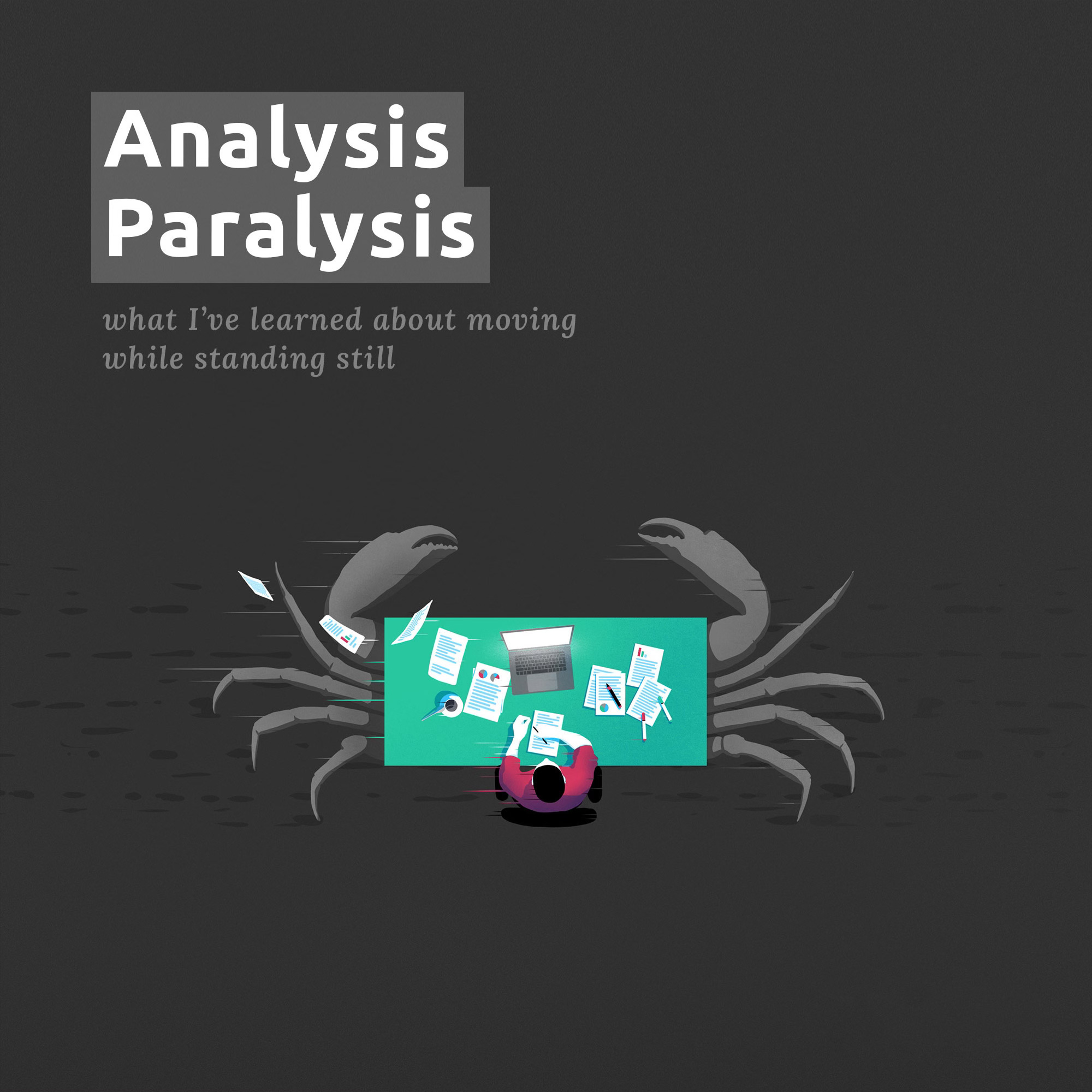
Analysis Paralysis prevents us from taking one step forward.
The term analysis paralysis implies overthinking, procrastination, perfectionism, and unproductivity.
But its biggest threat to progress lies even deeper.
Because analysis paralysis can feel really satisfying—diving deep into our thoughts, play with them, weighing options, exploring endless solutions, and collecting data.
That’s when its counterproductive nature unfolds: It makes us believe we’re hard at work, fully engaged in the process.
But it’s an illusion.
In reality, we’re inactive. Floating above the problem, circling it like a vulture—observing, analyzing, yet never lunging.
Or like a crab, shuffling sideways instead of moving forward.
If you find yourself stuck in this satisfying state, don’t panic or get frustrated.
Don’t even try to change it—yet.
From my experience, the most effective way to break free is to set a specific date—a deadline for this phase.
Maybe it’s next Monday, maybe next month—depending on your project.
Just internalize that this date marks your definite transition from theory to practice.
No excuses, no delays.
Until then, allow yourself to enjoy the last days in that stage of exploration—guilt-free.
Who knows, maybe in the end, the pressure of that upcoming deadline is exactly what you needed to push your creativity to the next level.
The Action Spine
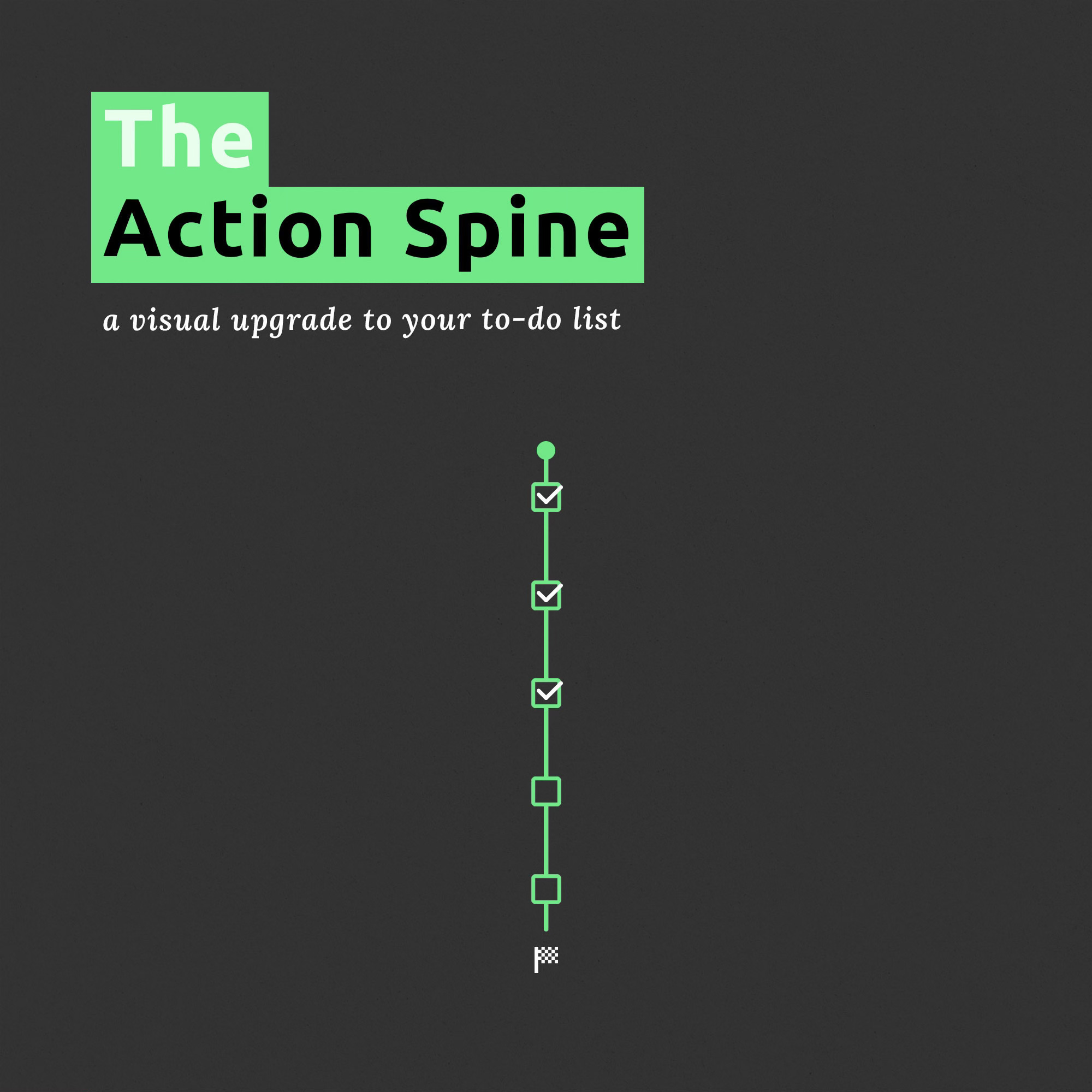
The Action Spine is a visual upgrade to your to-do list. Instead of a chaotic task pile, it gives your day a clear backbone.
Planned tasks go on the right.
Unexpected tasks go on the left.
This separation helps you stay in control while seeing patterns in what interrupts you.
The Action Spine in Action
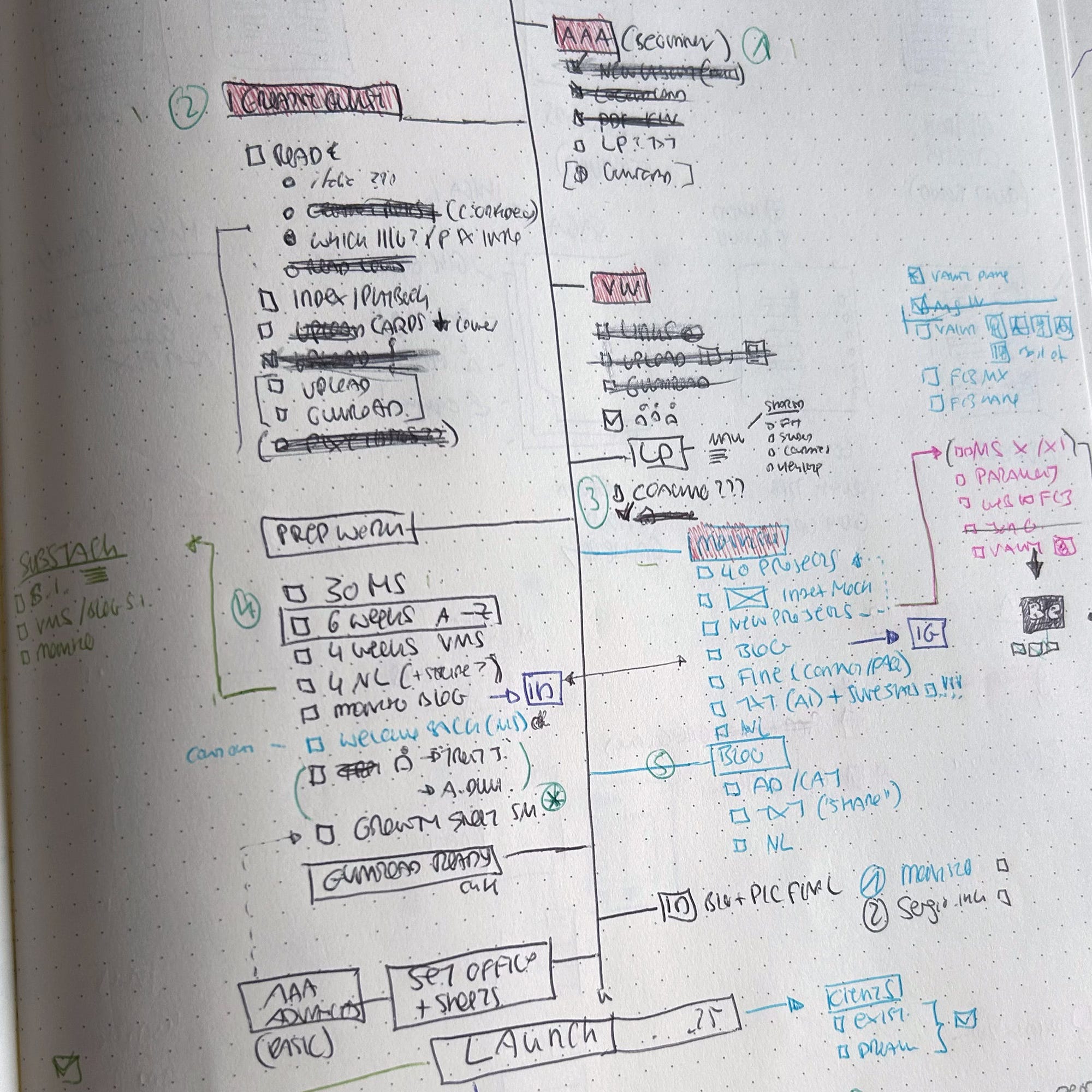
I quickly want to show you how the Action Spine can be used in various ways.
This is, for example, the structure I used when creating the different kinds of content for the Attention Renaissance till launch.
The key is to split on the left and the right and decide which is the primary and which is the secondary.
I mostly use the right side for creative and deep work, and the left side for administrative tasks.
Here are three examples:
Daily To Dos
Right side: planned tasks
Left side: unexpected tasks and spontaneous requests
Projects
Right side: creative, deep work
Left side: admin, shallow work
Teamwork
Right side: your tasks
Left side: team’s tasks
This method helped me a lot to maintain clarity in short- and long-term projects, as well as to spot attention-crashing patterns.
Give it a try tomorrow.
Explore More Creative Content of the Week:
Alliteration Anecdotes — a playful writing exercise.
Is AI Eating the World? — an essay on the next era.
Apache bleibt gleich — a documentary about ambition, and creative struggle.

Thanks for your valuable Attention.
See you next Sunday with more Creative Signals
Sergio
Whenever you’re ready, there are 2 ways I can help you:
1. The Creator Quests: Explore 50 gamified quests—from quick challenges to epic odysseys—plus a 180-page playbook. Your real-life action-adventure to level up your creativity through play and guidance.
2. Analog Action Agenda: A printable, gamified planner that turns your daily grind into your adventure